Las voces del museo
Voices at the museum
El museo de mi ciudad preparaba una exposición sobre objetos de uso cotidiano. Entre ellos había un reloj de pared que había estado durante años en una estación. Yo trabajaba como guía y recibí el encargo de escribir una descripción para quienes no pudieran ver el objeto con claridad.
The museum in my city was preparing an exhibition about everyday objects. Among them was a wall clock that had hung in a train station for years. I worked as a guide, and I was given the task of writing a description for people who couldn’t see the object clearly.
Mi primera versión decía que el reloj era antiguo, grande y bonito. También explicaba cuándo había llegado a la estación. Pensé que era suficiente: el texto duraba menos de un minuto y no incluía palabras difíciles. Antes de grabarlo, invitamos a varias personas a escuchar una prueba.
My first version said the clock was old, big, and beautiful. It also explained when it had arrived at the station. I thought that was enough: the text lasted less than a minute and didn’t include any difficult words. Before recording it, we invited several people to listen to a test version.
Una visitante, Laura, me preguntó qué quería decir con «grande». ¿Era del tamaño de una mano o de una mesa? Otro visitante señaló que «bonito» expresaba mi opinión, pero no le ayudaba a imaginar el reloj. Me sentí incómodo. Había pasado una mañana entera escribiendo y esperaba que solo corrigieran algún detalle.
One visitor, Laura, asked me what I meant by “big.” Was it the size of a hand or the size of a table? Another visitor pointed out that “beautiful” expressed my opinion but didn’t help him picture the clock. I felt uncomfortable. I had spent a whole morning writing, and I expected them to correct only a detail or two.
Laura me pidió que describiera la forma y los números. Me explicó que no necesitaba que yo decidiera por ella qué debía sentir. Quería información para construir su propia imagen. También preguntó si el reloj hacía ruido. Nadie lo había puesto en marcha durante la prueba, así que llamamos a la persona encargada de cuidarlo.
Laura asked me to describe the shape and the numbers. She explained that she didn’t need me to decide for her what she should feel. She wanted information so she could build her own image. She also asked whether the clock made any sound. Nobody had started it during the test, so we called the person in charge of looking after it.
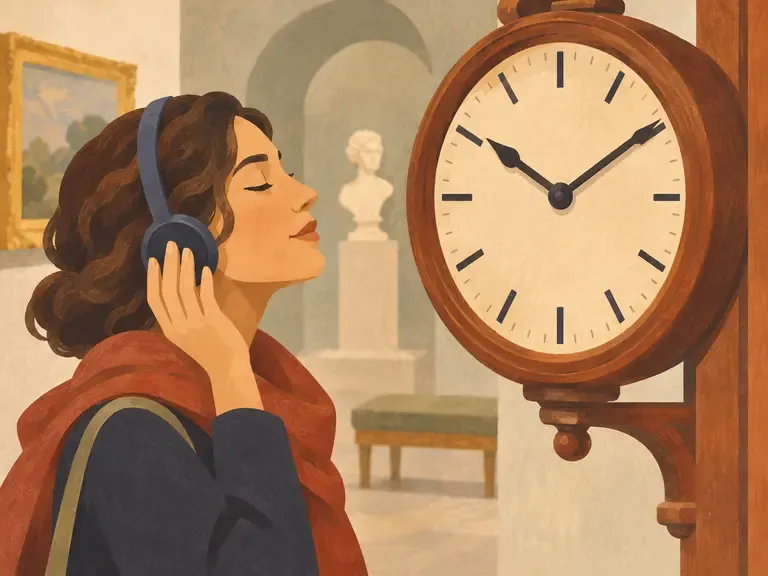
La nueva grabación empezaba con el tamaño aproximado y describía el círculo de madera, el fondo claro y los números negros. Añadimos el sonido de las agujas, después de comprobar que todavía funcionaban. Quité la palabra «bonito» y conservé una frase sobre la estación, porque ayudaba a entender para qué se había usado.
The new recording began with the approximate size and described the wooden circle, the light background, and the black numbers. We added the sound of the hands, after checking that they still worked. I removed the word “beautiful” and kept one sentence about the station, because it helped listeners understand what the clock had been used for.
Cuando Laura volvió, dijo que ahora podía imaginar mejor el objeto. También sugirió dejar una pausa después del sonido. Así, quien escuchara tendría tiempo de reconocerlo antes de oír la siguiente explicación. Probamos su idea y el equipo decidió mantenerla.
When Laura came back, she said she could now picture the object better. She also suggested leaving a pause after the sound. That way, whoever was listening would have time to recognize it before hearing the next explanation. We tried her idea, and the team decided to keep it.
Desde entonces preparo las descripciones con visitantes antes de dar el trabajo por terminado. No todas las personas necesitan los mismos detalles, y una grabación no puede responder a todas las preguntas. Pero escuchar esas preguntas me permite ofrecer algo más útil que mi primera impresión.
Since then, I prepare descriptions with visitors before I consider the work finished. Not everyone needs the same details, and a recording can’t answer every question. But listening to those questions lets me offer something more useful than my first impression.
Ready to read without the full translation?
Read with tap-to-translate